Monday, July 27, 2015

The Films of David Lynch: Dune (1984)

Dune (1984)
Directed by: David Lynch.
Written by: David Lynch based on the book by Frank Herbert.
Starring: Kyle MacLachlan (Paul Atreides), José Ferrer (Padishah Emperor Shaddam IV), Francesca Annis (Lady Jessica), Brad Dourif (Piter De Vries), Leonardo Cimino (The Baron's Doctor), Linda Hunt (Shadout Mapes), Freddie Jones (Thufir Hawat), Richard Jordan (Duncan Idaho), Virginia Madsen (Princess Irulan), Silvana Mangano (Reverend Mother Ramallo), Everett McGill (Stilgar), Kenneth McMillan (Baron Vladimir Harkonnen), Jack Nance (Nefud), Siân Phillips (Reverend Mother Gaius Helen Mohiam), Jürgen Prochnow (Duke Leto Atreides), Paul L. Smith (The Beast Rabban), Patrick Stewart (Gurney Halleck), Sting (Feyd Rautha), Dean Stockwell (Doctor Wellington Yueh), Max von Sydow (Doctor Kynes), Alicia Witt (Alia), Sean Young (Chani).

It’s one of the great ironies about David Lynch’s career that his 1984 Dune is considered his biggest bomb – critically as well as commercially, and is still the highest grossing film of his career. But when the studio sinks at least $40 million (a lot back then) into your sci-fi epic that they are hoping is going to be another Star Wars, and the films barely crosses $30 million at the box office, well, that’s not good. When it was released, Dune was considered to be a disaster – a bomb that could potentially destroy careers. Over the years, the film has gained a cult following, with some insisting that as bizarre as the film is, it’s actually a misunderstood masterpiece. I don’t say this very often but those people are, in a word, wrong. Dune is every bit as bad as people thought it was back in 1984. An incoherent mess of a movie that somehow spends almost its entire runtime doing exposition, and still makes no damn sense. I’ve seen it twice now – the first time I gawked in amazement at the screen. This really cannot be as bad as I think it is, can it? Watching it this time I have my answer – yes, it is. But as colossal a failure as Dune is on every conceivable level, it still stands as one of the most important films in David Lynch’s career. After his independent debut Eraserhead (1977) gained a cult following, and was a surprising success, he was approached by the studios. He did the relatively safe The Elephant Man (1980) – a decent enough film, a critical, awards and box office success (adjusted for inflation, it beats Dune’s gross – but barely - but it didn’t cost nearly as much to make). He then made Dune – taking over a film that had defeated others – like Alejanrdo Jodorowsky (last year’s doc Jodorowsky’s Dune is a must see for what happened there), and Ridley Scott, who walked away to make Blade Runner instead. It’s odd to think now, but Lynch was even considered (along with David Cronenberg, an equally odd choice) to be the director of Return of the Jedi. Had Dune been a great success, who the hell knows what direction Lynch’s career would have gone in. Because it worked out the way it did, Lynch learned a lesson. “I would rather not make a film, than make a film where I don’t have final cut” he would say of the experience. To get final cut, he had to make smaller films – which has led him to make the kind of bizarre films that only Lynch could make.

The plot is a mess – and really takes about 30 minutes or so before it can even start, because it requires so much setup. The film opens with a bizarre introduction by Princess Irulan (Virginia Madsen – who otherwise is barely in the film) as she floats in space (and occasionally fades out, for what reason, I do not know) as she tries to explain about the planet Arrakis aka Dune – a desert planet populated by giant sandworms, and an indigenous people known as the Freman. Arrakis is also the only place in the universe where “spice” is mine – which is the most valuable substance in the universe as, among other things, it allows you to fold space, so you can travel great distances without moving. Irulan is the daughter of Padishah Emperor Shaddam IV (Jose Ferrar), who rules the universe. He fears that Duke Leto Atreides (Jürgen Prochnow) has grown too popular and powerful – so he decides to give him control of Arrakis, which is a plum assignment, but is really just a ruse. He is going to use the Atreides long-time enemies, the Baron Vladimir Harkonnen (Kenneth McMillan) to kill the Duke, thus eliminating him. What he doesn’t know is that the Duke has a son – Paul (Kyle MacLachlan) – whose concubine mother, Lady Jessica (Francesca Annis), defied her orders to give the Duke a daughter (he’s only supposed to have daughters) – and instead gave him a son, because she loved the Duke so much. This, of course, sets up a war on Arrakis.

That paragraph was probably painful to read – it was certainly painful to write – but it only hints at the entire plot of the film. There are dozens of other characters – played by talented actors like Brad Dourif, Dean Stockwell, Max von Sydow and Patrick Stewart among many, many others. There is talk of a chosen one (gee, I wonder who it’s going to be), a psychic little girl with glowing blue eyes, a psychotic Sting strutting around in weird underwear, strange weapons that use sound to pulverize things, strange body shields that makes it look like the characters are trapped in translucent boxes, cheap looking special effects (even for their time). And there is an awful lot of shots of various characters – especially McLachlan’s – staring blankly off into space, while a voiceover tries to explain what the hell is going on. One of the “rules” of screenwriting is never use voiceovers because they are lazy. Of course, in films like Martin Scorsese’s GoodFellas (1990) and Casino (1995), and Spike Jonze and Charlie Kaufman’s Adaptation. (2002), among others – voiceovers are used to tremendous effect, filling in information and offering commentary in an entertaining way. I think when whoever wrote that “rule” was thinking of a movie like Dune – where it’s simply ridiculous to watch characters star off into space.

I cannot think of a thing about Dune that actually works. The performances are almost all bad – but the actors weren’t really given much to do. Best of all may well be Sting – who is given less to do than many of the other characters, but does it in such a cocksure way that at the very least he’s different than the rest of the characters – you remember his performance, even if you can barely remember what the hell he was doing in the movie. I guess Kenneth McMillan is pretty good as the Baron as well – although making him gay, and covering his face with gross, pulsating sores at the height of the AIDS epidemic was probably not the best idea in the world. Most of the other actors simply look lost – as they probably were.

Apparently, Lynch’s original cut of the film was close to 4 hours long, and he had wanted to cut it down to about 3 hours – but the final version of the film is only two hours and fifteen minutes. I have never seen the longer TV cut – which does run just over three hours – because Lynch had nothing to do with that cut, and took his name off of it. Perhaps a longer film would have been better – but I have to say, I doubt it. Dune is cluttered and overstuffed – too many characters, too much plot, too much strange dialogue to try to parse – too much everything. A longer version of the film would like not be better – just be more.

Looking back with the benefit of hindsight, it’s easy to see why this film didn’t work – and why Lynch was all wrong to direct, and write, the movie to begin with. Ridley Scott may have been able to reign the movie in – although apparently his version would have been two movies long. Scott has excelled over the years in making large scale epics, with large casts and scale. Scott, while not the most imaginative director, excels at this type of large scale storytelling. Lynch, decidedly, does not. Narrative has never seemed to be much interest to Lynch – his films are often complex, but the actual narratives are simple, the casts typically small. Yes, he expanded in the Twin Peaks TV series – but that was a series that allowed him time to explore, and he was working with TV vet Mark Frost, who certainly helped. With Dune, Lynch was basically on his own – and really had no idea what he was doing. You can make some auteur related arguments for Dune – but to what purpose?

I know the film has its fans. Perhaps for fans of Herbert’s novels, all this makes much more sense than it does to layman like myself. Perhaps they simply ignore the plot, and look at the utter weirdness on display throughout much of the movie. I think the movie generally looks bad – the special effects are awful – but the costumes and makeup are, at the very least, interesting, and often unique.

For me though, the film is interesting only because it’s a failed experiment by Lynch, a brilliant director, who was given the wrong project and ran with it. He knows he shouldn’t have made it – he doesn’t often discuss the movie, but when he does, it with regret. But perhaps he shouldn’t regret making the film. The years between Eraserhead and Dune seemed to be taking Lynch more and more into the mainstream – something he was about to depart from – and in the process, make a masterpiece.
 

Friday, July 24, 2015

The Films of David Lynch: I Predict by Sparks (1982)

Music Video: I Predict by Sparks (1982)

Between The Elephant Man (1980) and Dune (1984), David Lynch directed a music video for the cult group Sparks. I have to be honest, I don’t think I had ever heard of Sparks before I saw this video on Lynch’s Wikipedia filmography, and then tracked it down on Youtube for this series. But despite my ignorance of the group, they have had a long career, where the two permanent band members, brothers Ron and Russell Mael, have taken on many different genres over their 40 plus year career. They have even made a radio musical entitled The Seduction of Ingmar Bergman, which may be turned into a film by Guy Maddin.

The song I Predict is a catchy little number – nothing brilliant or ground-breaking – it sounds like many songs from the early 1980s, which isn’t my favorite musical era. The lyrics though are quite good – a little strange and joke-y, the song, as the title suggests, makes a series of bizarre predictions about what going to happen – ending the song with the lyric, and this song will fade out, which, of course, it does. The song became a minor hit in America – and perhaps would have become more had the video not been banned by MTV.
 
When you hear that a video was banned by MTV, you would expect it to be explicit or controversial. I Predict isn’t – at least not my today’s standards. The bulk of the video is made up of two types of shots – the lead singer (Russell) singing the song (standard), and keyboardist (Ron) doing a striptease on a cabaret stage with a Hitler mustache. There is no nudity in the video – but I guess the combination of cross dressing striptease and a Hitler mustache was enough for MTV to ban it.

The video, it must be said, not particularly good. It isn’t particularly bad either – it’s just like most music videos, it sells the song, and it ends, and you forget about it. Back in 1982, MTV and videos were in their infancy – so perhaps this looked provocative (after all, Lynch and the band couldn’t do much more – they already got banned for this). It’s something, but like the song, the video is amusing and not much else.

Thursday, July 23, 2015

The Films of David Lynch: The Elephant Man (1980)

The Elephant Man (1980)
Directed by: David Lynch.
Written by: Christopher De Vore & Eric Bergren & David Lynch based on the book by Sir Frederick Treves.
Starring: Anthony Hopkins (Frederick Treves), John Hurt (John Merrick), Anne Bancroft (Mrs. Kendal), John Gielgud (Carr Gomm), Wendy Hiller (Mothershead), Freddie Jones (Bytes), Michael Elphick (Night Porter), Hannah Gordon (Mrs. Treves), Helen Ryan (Princess Alex), John Standing (Fox), Dexter Fletcher (Bytes' Boy), Lesley Dunlop (Nora), Phoebe Nicholls (Merrick's Mother).

The Elephant Man is undoubtedly the most conventional film that David Lynch has ever directed. It tells the story of John Merrick (John Hurt), who was born with hideous deformities in Victorian Age England, spent much of his life as a circus freak, before being brought to a London hospital by Dr. Frederick Treves (Anthony Hopkins), and shown kindness, and given a home, for the first time in his life. The message of the movie is simple – Merrick had every reason to hate humanity, for he saw its ugliest side, and never did. He was an inspiration. How much this gels with the facts of Merrick’s actual life, I’ll leave for others to decide. But in Lynch’s film, everything is fairly straight forward. Yes, the film is well made – you can tell it’s by the same director who made Eraserhead just three years before, because of its visuals, and its sound. But it’s such a dull story, and it isn’t particularly given an original, or unique, treatment. It’s the type of “inspirational” true story that ends up getting nominated for a bunch of Oscars, than being forgotten. Which of course is what happened with The Elephant Man. Although the film didn’t win any Oscars – it was nominated for 8, including Lynch’s first for Best Director. It remains the only film he directed to get a Best Picture nomination. There’s a reason for that – Lynch usually doesn’t make films that groups like the Academy find palatable. That he did so with The Elephant Man should tell you that it’s one of the least “Lynch-ian” of all Lynch films.

The films opens with a bizarre scene (perhaps the most Lynch moment in the film actually), where Merrick’s mother is being trampled (raped?) by a heard of stampeding elephants. It’s a bizarre scene, and doesn’t much fit in with the rest of the movie, but it’s something to behold. From there, the movie follows Treves as discovers Merrick at a freak show – where he is “owned” by Bytes (Freddie Jones), who treats him horribly, beating, taunting him, locking him in cages, etc. Treves is amazed by what he sees – Merrick’s head is huge and misshapen – almost always covered by a hood. He has strange skin all over body. Treves knows that he cannot cure Merrick – nobody can – but he wants to help him. Bytes wants his prized possession back – and accuses Treves of doing the same thing he did – basically, putting him on display. Bytes’ isn’t entirely wrong – but Treves does try and help Merrick. He speaks to him kindly, and insists on everyone doing the same. He introduces him to popular society – some who are genuinely sympathetic, and others who just want to say they’ve seen the now famed Elephant Man. Merrick maintains his humanity and kindness throughout – and although he runs away once again when he is humiliated, he comes back once again as well. His life, according to the movie, should serve as an inspiration.

I’m not entirely sold on that message – as least as it delivered in the film. I think a big reason for that is that I’m not as sold on John Hurt’s performance as many are (he received one the film’s Oscar nomination for best actor – losing to Robert DeNiro for Raging Bull). Hurt is covered by so much makeup, that I think it ends up hurting his performance. The makeup itself was made of casts of the real Merrick, so it is accurate, but Hurt is so buried under it, I didn’t get much from that performance. The eyes are the only part of Hurt visible, and he does as good a job with them as he can, but even they cannot help in the scenes where Merrick is wearing a mask. Hurt speaks in such a soft voice throughout the film, that at times it’s hard to understand him. It doesn’t help that the movie has him go from a guy who won’t speak a word, to elegantly quoting Shakespeare, and having refined afternoon tea in a matter of a few short scenes. I’m also not quite sure what to make of the movie’s final scene of Merrick’s – which seem to imply he ended his own life on purpose (we had been told, more than once, during the course of the movie that Merrick has to sleep sitting up, because if he lied down, he would asphyxiate – yet in that final scene, that’s precisely what he does – purposefully, too). It’s hard not to think that awards voters back in 1980 were impressed with the makeup – and the big “I am NOT an animal” scene late in the film, and overlooked the rest of what is a rather bland performance.

The rest of the cast is better. Hopkins who has to navigate his complicated feelings about Merrick, worrying that he is exploiting him, but trying hard to treat him with kindness. John Gielgud as Treves’ boss, who at first isn’t sure about keeping Merrick, but changes his tune when he meets him. Wendy Hiller as the veteran nurse, who hard exterior masks a woman of genuine concern. Anne Bancroft, in just a few short scenes, as a famed actress who shows Merrick real, not faked, compassion. Jones as Bytes, who really does seem to miss Merrick when he comes looking for him, despite how cruel he is most of the time. Michael Elphick as The Night Porter, who exploits Merrick for his own gain. Elphick is good, but the whole storyline with his character doesn’t really work – especially the way it ends. We’ve clearly seen him sneak people into see Merrick before, who knows it is happening (and doesn’t say anything) – but the final time he does it, Merrick seems shocked, and it causes him to run away. Then we get a scene where Treves’ confronts him, and is backed up by Hiller’s nurse, which is supposed to be a feel good scene, but comes across as phony.

The best thing about the movie is the way it looks and sounds. Lynch worked with cinematographer Freddie Francis for the first time (they’d work together again on Dune and The Straight Story), and the black and white photography is wonderful – recalling the look of Eraserhead. Lynch once again worked with Alan Splet on the sound – and while the wall of sound effect isn’t as constant as it was in Eraserhead, Lynch does use it to great effect when it is utilized. Lynch worked with Frederick Elmes (who had shot Eraserhead) once again on the visual effects in the movie, and has moments where it works brilliantly. While I think the makeup work ultimately hurts John Hurt’s performance, it is quite an achievement in itself, and helps Lynch make the compare and contrast between Merrick and Victoria society. While Merrick is ugly on the outside, he is a good person underneath. Victoria England has a veneer of civilization, hiding a deep seeded ugliness. Lynch doesn’t develop this theme much – but it’s there.

The Elephant Man is far from a bad movie – anything with black & white photography this good, and sound design this unique is worth seeing. There are many elements of the film that actually work quite well. But both times I’ve seen the film, I could not help but be disappointed in it. I understand that this was Lynch’s first studio film – perhaps he felt he had to mute some of his weirdness to get any work at all. And hey, it worked. He ended up an Oscar nominated filmmaker, with a critical, awards and box office success on his second film – which would allow him to go onto bigger (but not better judging on his next film) things. It’s just when I normally think of a Lynch film, I think of a film only he could make. On Lynch could have made Eraserhead for example. There are a lot of people who could have made The Elephant Man.

Wednesday, July 22, 2015

Movie Review: Tangerine

Tangerine
Directed by: Sean Baker.
Written by: Sean Baker & Chris Bergoch.
Starring: Kitana Kiki Rodriguez (Sin-Dee), Mya Taylor (Alexandra), Karren Karagulian (Razmik), Mickey O'Hagan (Dinah), James Ransone (Chester), Alla Tumanian (Ashken), Luiza Nersisyan (Yeva), Arsen Grigoryan (Karo), Ian Edwards (Nash), Clu Gulager (The Cherokee), Ana Foxx (Selena), Scott Krinsky (Parsimonious John), Chelcie Lynn (Madam Jillian).

Sean Baker’s Tangerine both feels like many other movies, as well as something new and exciting. There’s a little bit of Kenneth Anger or John Waters in its depiction on life on the fringes of society that most people aren’t paying any attention to, a little bit of early Tarantino in all the L.A. locations, that feel like some place the characters of Reservoir Dogs or Pulp Fiction would frequent, a little bit of 1990s DIY Sundance films, and a few other types of films as well. Still, even if the movie does little to hide its inspirations, it does feel like something raw, energetic and totally unique. The film was shot entirely on an iPhone (with some of adapter to get the right aspect ratio), and the colors are as saturated as an old MGM musical (or a Michael Mann film now that I think about it). The storytelling can be sloppy at times – and even at just 95 minutes, the film feels padded and overlong – and the mostly non-professional acting is uneven in spots. But the film works – it pulls the audience along into its own strange little world.

The film opens with Sin-Dee Rella (Kitana Kiki Rodriguez) and Alexandra (Mya Taylor) in a Donut Shop – and not a chain donut shop either, but something called Donut Time. Both are transgender prostitutes, and Sin-Dee has just been released from a 28-day stretch in jail on Christmas Eve, when Alexandra gives her the bad news. Her pimp/fiancée Chester has been cheating on her the whole time she was in jail – and worse still, with one of natural born female prostitutes. This sets Sin-Dee off on a cross L.A. journey to try and find this woman. Alexandra meanwhile is giving out posters for her singing gig that night to all of their friends – telling them be there at 7 sharp. Then there’s Rasmik (Karren Karagulian) – an Armenian cab driver, with a wife and baby (not to mention a very loud mother-in-law) at home, who frequents the transgender prostitutes in L.A. – and has very particular tastes.

The film mainly plays as a comedy – even when the film gets a little violent - and when Sin-Dee finally finds the woman she’s looking for, Dinah (Mickey O’Hagan), its gets violent as she drags the poor woman across all over town, with just one shoe – the film mainly plays it for laughs (whether those scenes are funny or not is open for debate). The ending also has a little bit of a tone problem – as Baker tries to bring all the threads of the plot together in one big scene – a madhouse really, where we finally meet Chester, and everyone else shows up at one spot. This long scene is at once one of the best in the movie – it is remarkable how it sustains its energy throughout what is a long, complicated scene, and one of the more problematic – as things go from comic to serious in the blink of an eye, but the movie never pauses to consider the serious consequences of this scene. As well, the scene adds new information to an already overly complicated sequence.

Still, problems with the storytelling aside, Tangerine mainly works because the characters feel real, and unlike ones you have seen before. They aren’t saints to be sure, but they also aren’t really bad either – meaning they’re just like real people that way. They may do things that are awful – and hurt others without pausing to consider what it means – but they are mainly well-meaning. They feel like those rare movie characters who exist outside of the movie – as if the audience just dropped in on them for a day – their problems had started before the movie, and will continue afterwards.

It’s somewhat surprising to be that co-writer/director Sean Baker is not a first time filmmaker, because Tangerine certainly feels like a debut feature. It has the energy and ambition that first timers often have, coupled with the raggedness of the execution. You can tell there’s a lot of talent here, it just needs to be a little more focuses. Overall, Tangerine works because of the humanity on display – a glimpse into a world that movies rarely attempt to portray – but this one does, and does it well. Baker wasn’t on my radar before – but he is now, and I want to see what he does next.

The Films of David Lynch: Eraserhead (1977)

Eraserheard (1977)
Directed by: David Lynch.
Written by: David Lynch.
Starring: Jack Nance (Henry Spencer), Charlotte Stewart (Mary X), Allen Joseph (Mr. X), Jeanne Bates (Mrs. X), Judith Roberts (Beautiful Girl Across the Hall), Laurel Near (Lady in the Radiator), Jack Fisk (Man in the Planet).

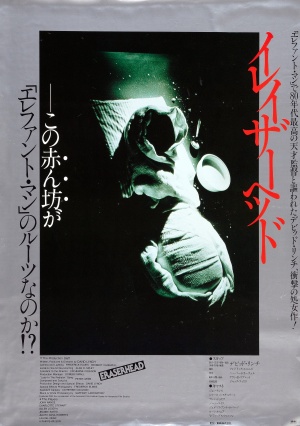
No matter what the circumstances of Eraserhead’s creation, it would be a remarkable achievement. David Lynch’s debut film comes as close as any movie I have ever seen to recreating a nightmare for the audience watching the film. Lynch’s strange wall of sound was ground-breaking in many ways, and places us directly into the headspace of the main character. The art direction makes the film seem like its set in the past and the future at once. The film is remarkable in many ways. What makes that all the more impressive is the fact that Lynch had never directed a feature before, he made this on a shoestring budget – over the course of five years, shooting scenes when he had the money and had to replace the original cinematographer when he died. Yet the movie doesn’t show the signs of what should have been all those limitations.

The film stars Jack Nance as Henry Spencer – a strange, sad, confused young man, dressed in an ill-fitting suit, with a giant mass of hair on his head. He works in a factory – in a bleak industrial hell scape – but says throughout the movie that he’s now “on vacation”. After a lengthy opening of him walking through his world, the plot kicks in when he is called to the house of his girlfriend’s parents. His girlfriend, Mary X (Charlotte Stewart) hasn’t been around much lately – and it has confused Henry. After the surreal dinner begins – with her overly cheerful father, who seems to freeze at times, her angry mother, who like Mary is prone to unexplainable fits, and a very small chicken that bleeds a lot – Henry discovers just why he hasn’t seen Mary in a while – and why he has been called over now. There is baby – at the hospital. It is Mary and Henry’s – so the pair have to get married and raise it. Cut to life in Henry’s nightmarish apartment – with his new wife and child – and things have gone from bad to worse. The child is not a normal child – he looks like a giant spermatozoa or a creature perhaps related to the alien creature for Alien (which came out after this movie). He is a mewling, drooling, slobbering, constantly crying mess of a child. He just won’t shut up – and Mary has soon had enough, and walked out on them both, leaving Henry in charge. And he has no idea what to do.

It doesn’t take a psychology major to figure out the issues that Henry – and Lynch – are going through in the movie. The film is, at its core, about a fear of fatherhood, responsibility, relationship and intimacy. Watching it for the first time since I had children, Eraserhead takes on another dimension. The child in Eraserhead may not be literal child – I don’t think anything in Eraserhead is really literal – but that fear is undeniable. Henry cannot care for the child – and doesn’t know how to. He has other, competing desires – some involving the Beautiful Girl Across the Hall. There are two other characters in the film – who represent opposite desires. The film opens with Man in the Planet – played by Jack Fisk (future production designer on films like There Will Be Blood, as well work by Terrence Malick, and yes, David Lynch) – pulling levers, controlling everything above him. Then there is the Lady in the Radiator, who sings her strange song (In Heaven) – which beckons Henry closer.

Eraserhead is an odd film to say the least – the type of film someone like Lynch could only make on his own, without a lot of people getting in the way. The whole film plays like a nightmare – a bleak one at that, with unexplained events littered throughout. Lynch’s films often operate on dream logic rather than reality – but often times there is some relief from the nightmare. Twin Peaks and Blue Velvet at least appear to take place in idyllic places until their secrets come out – but there is nothing idyllic about the world of Eraserhead.

Perhaps the single greatest technical achievement in the film is the sound design – by Lynch and Alan Splet – who worked with Lynch on every project between The Grandmother and Blue Velvet. The sound in the film is constant – the industrial noises that are loud whenever Henry is outside, and seep through the walls when he is not. The constant hiss of the radiator. The ever present crying of the baby – there is not a quiet moment in Eraserhead, and it serves its purpose of placing us in the middle of the nightmare Henry is living. But the film also looks great – shot in stark black and white, first by Herbert Cardwell, who died during production, then by Frederick Elmes – who give the film its nightmare look. There is a dream sequence in the film – a nightmare within the nightmare if you will – which is even bleaker than the rest of the film.

Eraserhead is a dark film, to be sure – a tormented one that could only come from David Lynch. While his shorts had shown promise, they do not equal Eraserhead, which has to stand as one of the greatest debut features of all time. Lynch took his time making this film – part of this was because of lack of funds, but part of it was by design. He took a year to get the sound right for example. It’s as if Lynch, who struggled to get the film made at all, wanted to ensure that whenever he finished it, it was distinctly his. And it is. For such a low budget film, with such a singular vision however, it’s influence can be seen in films as disparate as Kubrick’s The Shining, the Coen’s Barton Fink and David Fincher’s Seven – not to mention Alien (Lynch apparently would not work with H.R. Giger on Dune, because he felt Giger stole his ideas – Giger being the one who designed the Alien after all). It is a perfect place for Lynch’s directing career to truly start. His first great film – and the best thing he would make for quite a while.

Tuesday, July 21, 2015

Movie Review: Trainwreck

Trainwreck
Directed by: Judd Apatow.
Written by: Amy Schumer.
Starring: Amy Schumer (Amy), Bill Hader (Aaron), LeBron James (LeBron James), Colin Quinn (Gordon), Brie Larson (Kim), Tilda Swinton (Dianna), John Cena (Steven), Vanessa Bayer (Nikki), Dave Attell (Noam), Randall Park (Bryson),  Jon Glaser (Schultz),  Ezra Miller (Donald), Evan Brinkman (Allister), Mike Birbiglia (Tom), Norman Lloyd (Norman), Method Man (Temembe), Amar'e Stoudemire (Amar'e Stoudemire).

Judd Apatow is a smart man. His last two films – Funny People and This is 40 – were both box office and critical disappointments. This alongside the fact that his two previous films – The 40 Year Old Virgin and Knocked Up were both successes, and his good friend Paul Feig’s successes alongside Melissa McCarthy, made it look like perhaps Apatow’s moment had passed. But, as mentioned, Apatow is smart – and knows talented people, and so was smart enough to hitch his wagon to Amy Schumer. Schumer’s TV show, Inside Amy Schumer, is often daring and boundary pushing in its depiction of feminist issues on TV and in comedy (and even more frequently, hilarious). The two of them working together on Trainwreck – which Apatow directs, and Schumer wrote and stars in, works quite well – even if it does seem like Schumer has been forced, a little bit anyway, to fit her comic persona inside an Apatow shaped box. Trainwreck has a lot in common with The 40 Year Old Virgin and Knocked Up – except the genders have been reversed, so that it’s Schumer playing the irresponsible one who needs to grow up, and her love interest – Bill Hader – who has to be the one who helps her get there. Trainwreck is not revolutionary, like Schumer’s TV show, but what it is one of the funniest mainstream comedies of the year, so who really cares. It gives Schumer a fine entrance into the movies – where stardom looms – and gives Apatow a chance to get back on top. The two work well together.

In the film, Schumer plays a thinly veiled version of her own comic persona – also named Amy. But this Amy isn’t a stand-up comic and TV star, but like every other romantic comedy heroine, works at a New York based magazine. This one is called S’Nuff, and it’s a seemingly offensive, sexist and misogynistic “Men’s magazine”. Amy is up for a big promotion – and she has to nail her next story, a profile of a sports doctor, Aaron (Bill Hader), who works with all the big name athletes you could think of. But she hates sports. And Aaron is her seeming complete opposite. When we meet her, Amy is in a sort of relationship with Steven (Jon Cena), but also goes out and has a series of one-night stands – often waking up hung-over, after a night of hard drinking not sure exactly where she is. Aaron is more of a homebody – a little reserved and kind of awkward around women. Or, at least, I think that’s how I think he’s supposed to be, although as played by Hader, he’s doesn’t really come off that way. Anyway, of course these two are going to fall for each other – despite it being completely unprofessional, and no one will much care about that.

As with every Apatow movie, there are also several subplots that while enjoyable in their own right, may have been better off being cut. There’s Amy’s father (Colin Quinn) – one of those outspoken old bigots in the Archie Bunker traditional, who has MS and has had to go into assisted living, despite being very young to be there. There’s her sister Kim (Brie Larson) – who went in the opposite direction of Amy, married young, become a stepmother, and is now on her way to be a mother herself. There is Aaron hanging out with one of his clients – LeBron James – who spends an awful lot of time in New York for someone who works in Cleveland. There is a series of workplace scenes with Amy’s cruelly dismissive boss – Tilda Swinton – and her co-workers who all walk on eggshells around her. Some of these subplots work, some don’t – but all of them are elevated by having terrific actors in roles that sometimes border on the underwritten. Again, as with many Apatow movies there are also several scenes that probably seemed funny by themselves that simply drag the whole movie to a dead stop and don’t work in the movie as a whole (none more apparent than a “romantic intervention” staged by an odd collection of celebrities who are supposedly Aaron’s friends, that is not only unfunny, but painfully so).

Yet, whenever the movie threatens to head off the rails, Schumer herself is the one who more often than not brings it back. Schumer is thoroughly charming, funny and likable throughout the film. Like some other Apatow protagonists, she does some things that risk losing audience sympathy – but she’s so likable, and vulnerable, that she never does. Schumer doesn’t quite push as hard against stereotypes in the film as she does on her TV show – mainly playing it safe, as far as R rated romantic comedies go anyway. That’s actually kind of smart, as it allows her to establish herself as a legitimate movie star in this movie – and it works. If the film were just a comedy, it would still be worthwhile, as it’s smarter and funnier than most R-rated comedies to come out of Hollywood. But the film is also legitimately heartfelt – and may well have you tearing up once or twice. That balance takes skill, and although at times it’s not quite right, for the most part Trainwreck nails it.

In short, Trainwreck works – it walks that fine line between a Schumer comedy and an Apatow comedy. Schumer probably does have a more daring comic movie inside her somewhere, one that doesn’t quite cohere to Apatow’s style of humor – which while it can be gross out, is actually fairly conservative underneath all the sex. Schumer may be the person to burst past that at some point. For now though, Trainwreck will more than suffice.

Movie Review: Ant-Man

Ant-Man
Directed by: Peyton Reed.
Written by: Edgar Wright & Joe Cornish & Adam McKay & Paul Rudd based on the comic book by Stan Lee & Larry Lieber & Jack Kirby.
Starring: Paul Rudd (Scott Lang / Ant-Man), Michael Douglas (Dr. Hank Pym), Evangeline Lilly (Hope van Dyne), Corey Stoll (Darren Cross / Yellowjacket), Bobby Cannavale (Paxton), Judy Greer (Maggie Lang), Abby Ryder Fortson (Cassie Lang), Michael Peña (Luis), David Dastmalchian (Kurt), T.I. (Dave), Wood Harris (Gale), Hayley Atwell (Peggy Carter), John Slattery (Howard Stark), Martin Donovan (Mitchell Carson).

Perhaps the best thing about Marvel’s Ant-Man is how low the stakes really are. For the first time in a long while in the Marvel Universe, the fate of the entire world doesn’t seem to rest of the heroes shoulders at every single minute, and there isn’t some sort of mysterious stone that we all have to care about for the entire movie. Instead, Ant-Man keeps the stakes low – basically a heist movie, where the hero has to break-in somewhere that has been designed not to be broken into. That the hero can shrink himself into the size of an ant will certainly help him break in – and is also, admittedly, completely ridiculous. But the filmmakers seem to know just how silly the premise is, and run with it anyway – allowing the audience to have fun with the goofiness. Undoubtedly, Ant-Man will get sucked into the Marvel Universe soon enough – with its huge plots, and constant threat of utter annihilation. But for now, Ant-Man is just plain goofy fun.

Paul Rudd stars as Scott Lang – an ex-con just released from prison after a few years inside for burglary. He isn’t really a crook though – but rather a little bit of a genius. His old bosses did something bad, and he broke the law to expose it – which landed him in jail. Now out, all he wants is to get an honest job so he can she his beloved daughter – Cassie. Things aren’t that easy though – and through a series of events too complicated to explain here, he ends up the protégé of Hank Pym (Michael Douglas) – a genius who decades ago created the “Pym Particle”, which allows you to shrink to the size of an ant, and also have super strength when you are that small. Pym needs Scott to break into his old company, because his former protégé, Darren Cross (Corey Stoll), is close to figuring out how Pym created his particle all those decades ago, which could, say it with me now, put the fate of the world in danger. So Lang, with the help of Pym, and Pym’s daughter Hope (Evangeline Lilly) – bitter that she wasn’t chosen to be the new Ant-Man – sets about training to do steal the technology from Cross.

So yes, the fate of the free world is at stake again after all in Ant-Man – but at least not in the same tedious way it often is in the Marvel movies. The movie – thankfully – doesn’t waste too much time talking about that though, instead it focuses on Rudd – who the film allows to pretty much keep his comic persona intact, which works for the movie. His three buddies – played by Michael Pena, T.I. and David Dastmalchain – are if anything even more fun that Rudd – particularly when Pena goes on about what he heard from his cousin.

Of all the MCU movies, Ant-Man most reminded me of the original Iron Man – which was an origin story, with a lot of setup needed, which almost ran out of time to have an actual storyline. The same could be said of Ant-Man as well – Stoll’s villain isn’t given all that much screentime to be honest – but he makes the most of it when he is there. Basically, the movie is a sequence of training montages – which can grow tedious in the wrong hands, but work quite well here. In part, that’s because the special effects are so go – an “Incredible Shrinking Man” is not a new idea of course, but it’s one that director Peyton Reed pulls off wonderfully well. Yes, people continue to be bitter about Edgar Wright leaving the project – and who knows, perhaps Wright’s film would have been even better than this one is, but what Reed does here is actually quite good, and inventive.

In Short, Ant-Man is one of the better MCU movies. No, it doesn’t reinvent the wheel, and it doesn’t really add much to the universe we already know. But it’s a lot of goofy fun – and for a movie about a superhero the size of an ant, really, what else could anyone want?